Contribution margin: the number that decides how much your ads can cost.
Revenue says how much came in; contribution margin says how much of it can pay for ads. One figure sets your break-even ROAS, the most an order can cost and how many orders a month has to sell.
Most ad budgets are set from revenue: spend a share of sales, or aim for a ROAS that sounds healthy. Neither says whether the ads paid for themselves. The number that does is contribution margin — what an order leaves after VAT, goods, shipping, fees and refunds, before any ad and before rent.
One month, worked through
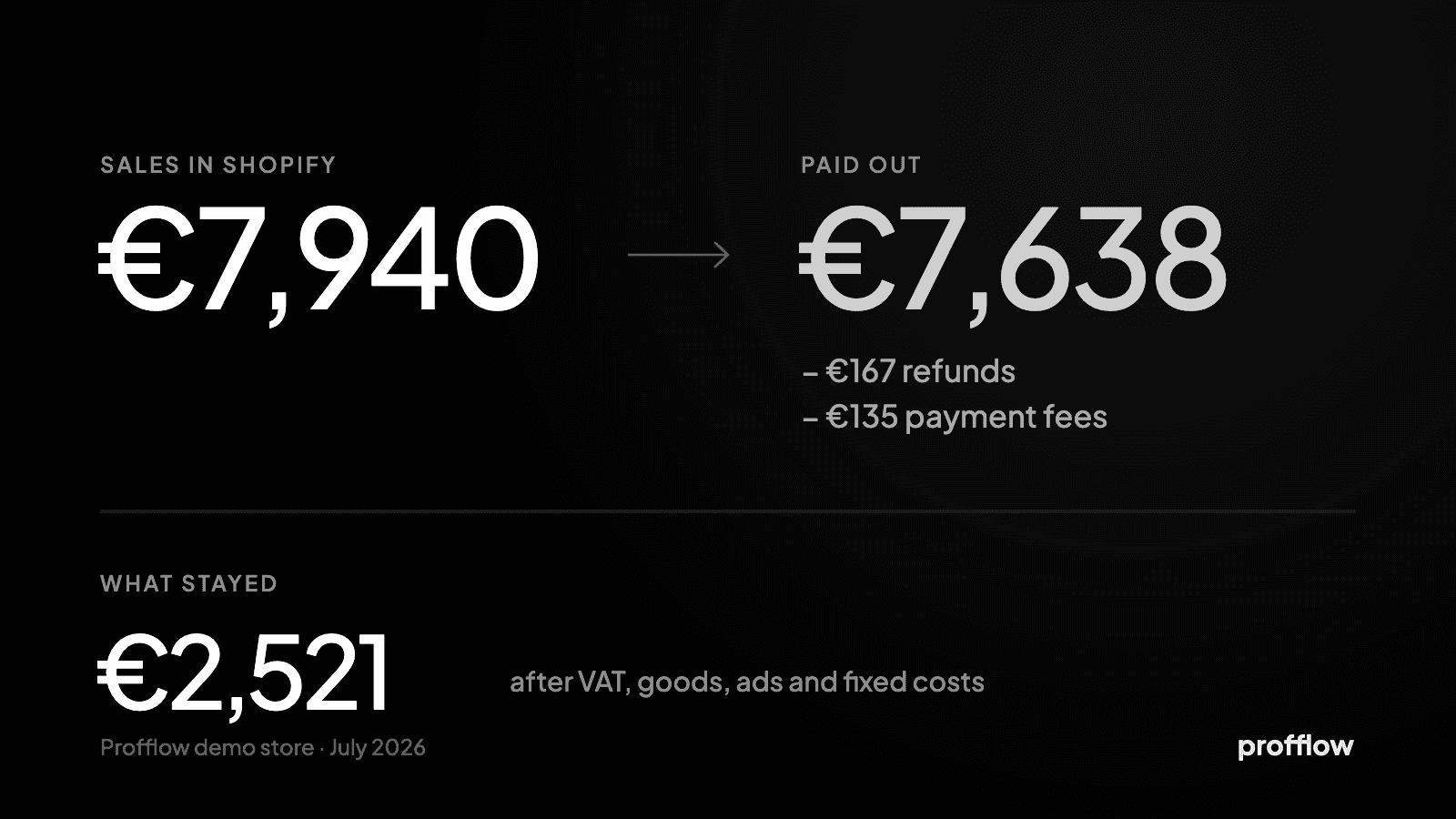
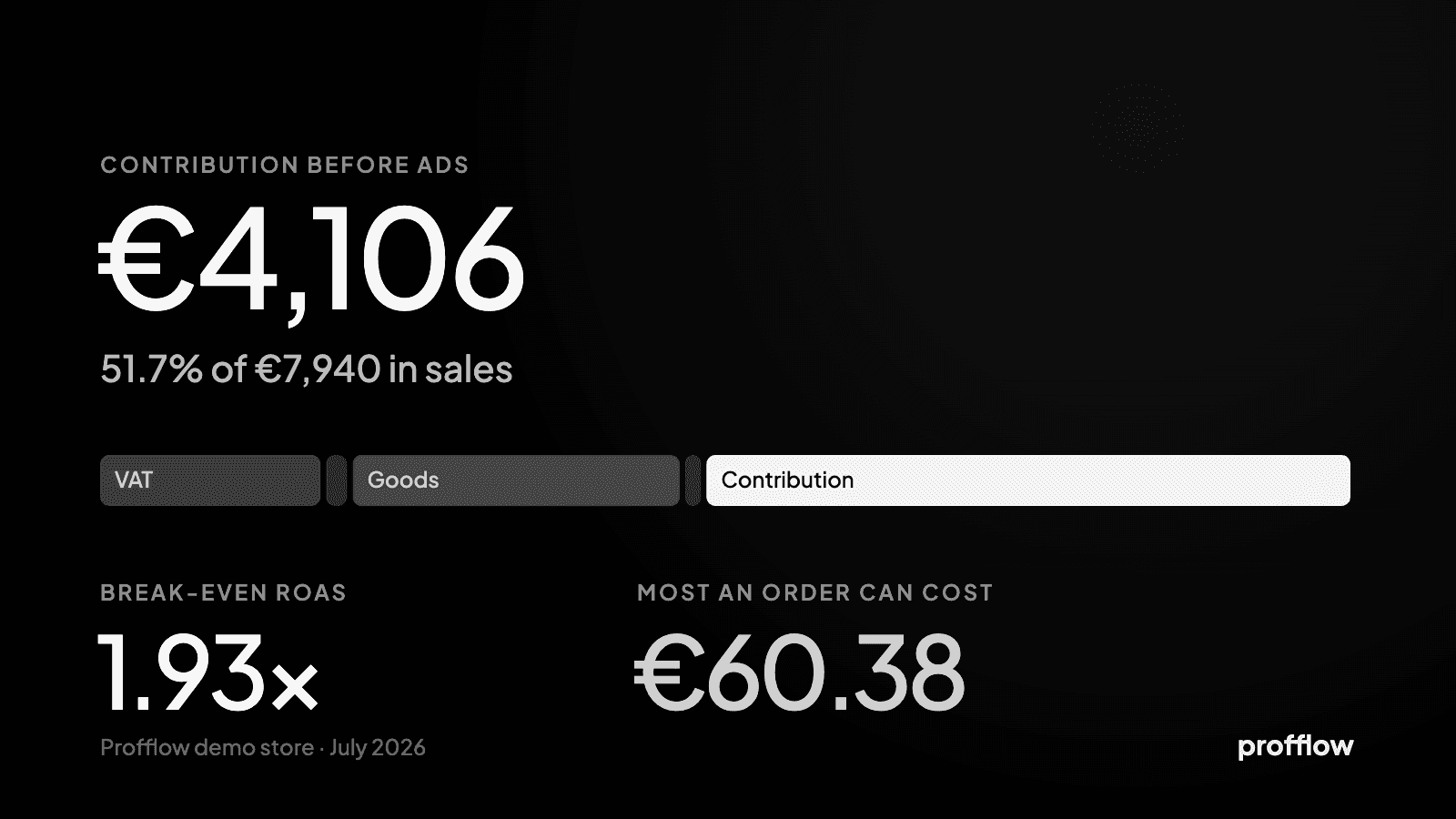
Profflow’s example store, July 2026: €7,940 of sales, less €1,429 VAT inside the price, €167 refunds, €2,103 goods and €135 payment fees, leaves €4,106 before ads. That is a contribution margin of 51.7%.
Everything the ads may cost comes out of that €4,106. Spend all of it and the month breaks even before rent; spend more and the ads have taken money the store did not make.
Three numbers that follow from it
- Break-even ROAS: sales ÷ contribution = €7,940 ÷ €4,106 = 1.93×. A campaign reporting less than that loses money on every order it brings in.
- The most an order can cost: €4,106 ÷ 68 orders = €60.38. An order bought for more than that lost money before the rent was paid.
- Break-even orders: (€1,180 ads + €405 fixed costs) ÷ €60.38 = 27 orders. The month sold 68.
Why one average is not enough
The store’s margin is an average of its products’ margins, and ads rarely sell the average. A campaign that sells a product keeping 60% of its price breaks even at about 1.67×; one that sells a product keeping 30% needs 3.33×. Judged against one store-wide target, the first looks weak and the second looks fine — the opposite of what they are doing to the month.
Example: break-even ROAS = 1 ÷ contribution margin. 1 ÷ 0.60 = 1.67×. 1 ÷ 0.30 = 3.33×.
What to do with it
- Work out contribution per product before setting a target ROAS — from the cost entered for each product, not a percentage typed once.
- Set targets per campaign from the products it actually sells.
- Recheck before a sale: a discount comes straight out of contribution, so the break-even ROAS rises with every percent off.
Profflow works out each order’s contribution from its own products, judges every campaign on the orders it brought in, and shows its break-even line beside the ROAS the platform reports.